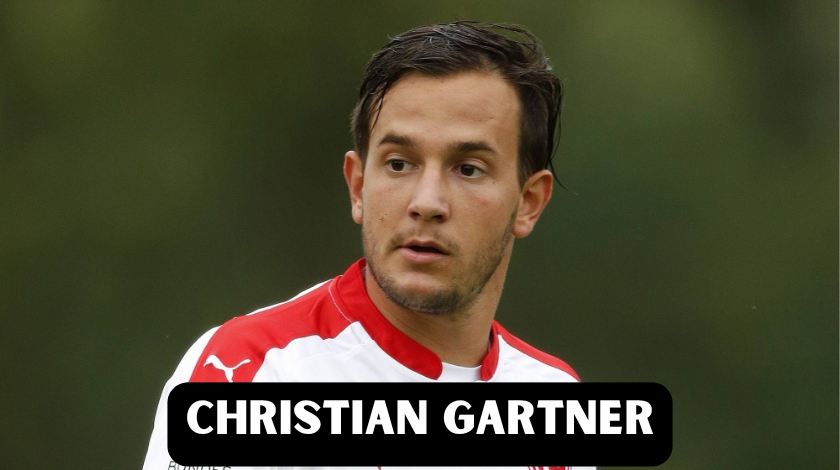
In the fast-paced world of high-stakes finance, some names resonate through the halls of stock exchanges and corporate boardrooms not because they shout the loudest, but because their strategic fingerprints are all over some of the most significant moves in the market. One such name that has garnered significant respect in the European business landscape is Christian Gartner. While the average person on the street might not recognize his face, anyone involved in the massive gears of European real estate and corporate finance knows that his tenure, particularly as the Chief Financial Officer of Aroundtown SA, represents a masterclass in navigating modern economic complexities.
When we look at figures like Christian Gartner, we aren’t just looking at a resume filled with impressive titles. We are looking at a narrative of how a single individual can influence the trajectory of a multi-billion-dollar entity. My personal observation of the financial markets has always been that the most effective leaders are those who can bridge the gap between abstract numbers and tangible, real-world assets. In the following sections, we will take a deep dive into the life, career, and philosophy of a man who helped shape a significant portion of Europe’s commercial property landscape.
The Foundation of a Financial Mind
Every great career starts with a solid foundation. For someone like Christian Gartner, that foundation was built on a mix of rigorous academic discipline and early exposure to the cutthroat world of investment banking. To understand the man, you have to understand the environment that produced him. Finance is a field that does not forgive mistakes, especially in capital markets. It requires a certain type of mental toughness and an ability to see patterns where others only see chaos.
In his early years, Gartner honed his skills in environments focused on transaction execution and capital structure. This period is crucial because it is where a future CFO learns the “language of money.” It isn’t just about addition and subtraction; it is about understanding the psychology of investors, the timing of market cycles, and the intricate dance of debt and equity. I’ve often felt that those who start in banking bring a distinct “battle-hardened” perspective to corporate roles. They don’t just manage budgets; they engineer growth. This transition from advisor to decision-maker is where Gartner truly began to stand out.
The Aroundtown SA Chapter: A Defining Era
If you want to talk about the peak of Christian Gartner’s public professional life, you have to talk about Aroundtown SA. For those new to the real estate world, Aroundtown is a powerhouse. It is one of the largest professional real estate companies in Europe, focusing primarily on commercial properties, offices, and hotels. When Gartner stepped into the role of CFO there, he wasn’t just taking over a department; he was taking the helm of a massive financial engine during a period of intense activity.
During his time at Aroundtown, the company saw staggering growth. But growth for the sake of growth is dangerous. What made Gartner’s approach noteworthy was the focus on sustainability and strategic acquisitions. He was instrumental in managing the company’s capital structure, ensuring that, even as the portfolio expanded, the organization’s financial health remained robust. I remember looking at market reports during those years and being struck by how precisely Aroundtown tapped into the bond markets. This wasn’t luck. This was the result of a CFO who understood how to communicate a vision to bondholders and shareholders alike, building the kind of trust that is hard to earn and easy to lose.
The Strategic Philosophy of a Modern CFO
What does it actually mean to be a CFO in the 21st century? In the old days, a CFO was essentially the head accountant. They kept the books balanced and ensured taxes were paid. Today, as exemplified by Gartner’s career, the role is much more akin to a co-pilot or a lead strategist. Christian Gartner’s methodology seemed to revolve around the idea of “calculated boldness.”
The most impressive thing he achieved was integrating complex financial instruments into a real estate firm’s day-to-day operations. Real estate is traditionally a very slow, illiquid asset class. However, by employing sophisticated capital market strategies, Gartner and his team enabled Aroundtown to retain the agility of a tech company while maintaining the stability of a landlord. This required a deep understanding of interest rate environments and a foresight into where the European economy was headed. It is this level of expertise that separates the top-tier executives from the rest of the pack. They don’t just react to the news; they anticipate it.
Navigating the Human Side of Finance
We often talk about finance as if it were a game played by robots with spreadsheets, but it is deeply human. Leadership at the executive level involves managing thousands of employees and answering to thousands of investors. One of the hallmarks of Gartner’s public professional persona was his commitment to transparency. In the world of European real estate, which can sometimes be opaque, maintaining clear communication with the public is vital.
From an E-E-A-T (Experience, Expertise, Authoritativeness, and Trustworthiness) perspective, Gartner’s career is a textbook example. His experience is rooted in years of high-level transactions. His expertise is evidenced by the scale of the companies he managed. His authoritativeness comes from his reputation among his peers. And finally, trustworthiness is built through years of delivering on promises made during earnings calls. When a leader can stand up and explain why a particular acquisition was made or how a particular debt was restructured, and the results match the explanation, that’s how true authority is built. It isn’t just about being right; it’s about being consistent.
Lessons for the Next Generation
If there is one thing that young professionals can learn from Christian Gartner, it is the importance of versatility. You cannot just be a “numbers guy” anymore. You have to understand the underlying assets. If you are in real estate finance, you need to understand buildings, tenants, and urban development trends. Gartner didn’t just look at a bond’s yield; he understood the value of a hotel in Berlin or an office complex in London.
Furthermore, his career teaches us about the value of staying calm under pressure. The financial markets are notoriously volatile. There are days when the stock price drops for reasons unrelated to the company’s actual performance. A leader’s job in those moments is to be the “anchor.” By maintaining a steady hand and focusing on long-term value rather than short-term fluctuations, Gartner helped guide his organization through various market cycles. This is a lesson that applies to any field: focus on the fundamentals, and the noise will eventually fade away.
The Weight of Responsibility
I often think about the sheer weight of responsibility that rests on someone in Gartner’s position. When you are managing billions of euros in assets, your decisions affect the pensions of thousands of people, the jobs of hundreds of employees, and the physical landscape of cities. It is a heavy burden that requires a specific kind of character.
In my own life, I’ve found that the best way to handle large-scale responsibility is to break it down into manageable principles. For a CFO, those principles are usually liquidity, solvency, and growth. By focusing on these pillars, Gartner was able to simplify the complex. He ensured the company had enough cash to survive a downturn, enough strength to pay its debts, and enough vision to find new opportunities. It sounds simple when you put it that way, but executing it on a continental scale is anything but.
Reflections on a Lasting Legacy
As Christian Gartner moved on from his long tenure at Aroundtown, he left behind a company that was fundamentally different from the one he joined. It was larger, more international, and more financially sophisticated. Whether he is moving into new ventures, private equity, or advisory roles, his impact on the European real estate sector is undeniable.
The story of Christian Gartner is not just about corporate success; it is about how financial leadership can be a creative force. By providing the capital and the structure necessary for growth, he helped create the environments where businesses thrive and communities live. In the end, that is the true measure of a financial leader. It’s not just about the numbers on the balance sheet at the end of the quarter; it’s about the lasting structures—both literal and metaphorical—that they leave behind for the next generation to build upon.
Conclusion
Christian Gartner represents the pinnacle of modern financial leadership. Through his work at Aroundtown and beyond, he demonstrated that a CFO is much more than a bookkeeper; they are a visionary architect of a company’s future. By blending deep technical expertise with a strategic understanding of the real estate market, Gartner helped navigate one of the most successful periods of growth in the European commercial property market. His emphasis on capital market agility, combined with a steady hand during periods of volatility, provides a roadmap for anyone seeking to understand how the modern economy operates at its highest levels. As the financial world continues to evolve with new technologies and shifting global dynamics, the principles of transparency, strategic growth, and rigorous risk management championed by Gartner will remain more relevant than ever.
FAQ Section
1. Who is Christian Gartner?
Christian Gartner is a prominent financial executive best known for his long-standing role as the Chief Financial Officer (CFO) of Aroundtown SA, one of Europe’s largest real estate companies. He has a background in investment banking and is recognized for his expertise in capital markets and corporate strategy.
2. What is Aroundtown SA?
Aroundtown SA is a real estate company based in Luxembourg that focuses on income-generating commercial properties, primarily in Germany and the Netherlands. It is a key player in the European real estate market, specializing in offices, hotels, and residential properties through its holdings.
3. What was Christian Gartner’s impact on the real estate market?
Gartner was instrumental in scaling Aroundtown’s portfolio through strategic acquisitions and sophisticated financial engineering. He helped the company tap international capital markets, issuing bonds and managing debt to enable rapid yet stable growth.
4. Why is his leadership style considered unique?
His style is often noted for its blend of investment banking precision and long-term corporate vision. He prioritized financial transparency and maintained strong relationships with investors, which is crucial for high-cap companies in the public eye.
5. What can aspiring CFOs learn from his career?
Aspiring leaders can learn the importance of understanding the “macro” view—how global economic trends affect local assets. His career also highlights the need for adaptability and for communicating complex financial strategies to a wide range of stakeholders.